

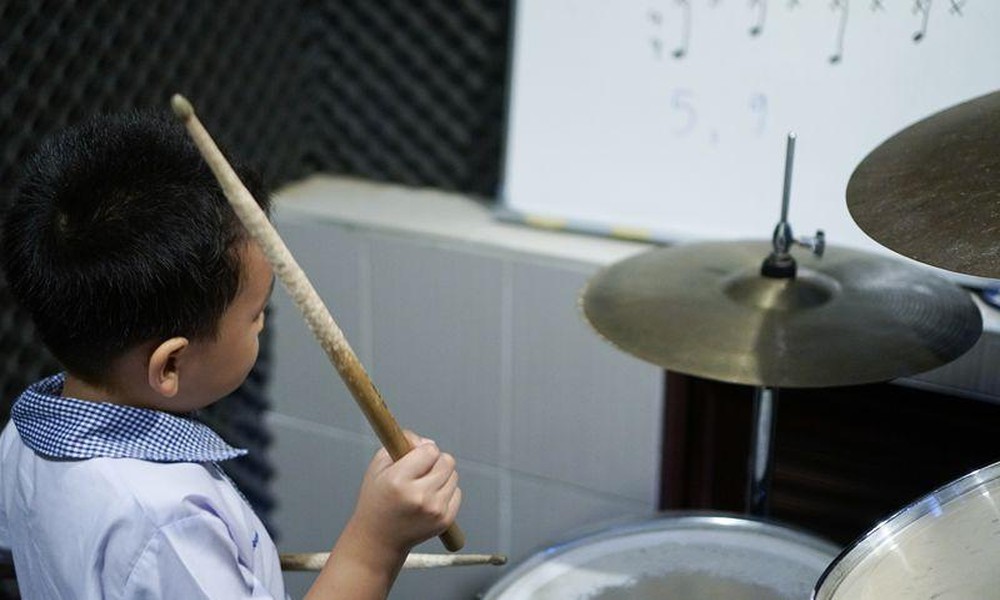
Parents often sign children up for drum lessons with a mix of curiosity and uncertainty, especially when comparing options within the wider landscape of music lessons in the city-state. The first six months are not about producing polished performances, but about building core musical and behavioural foundations that shape how a child learns, listens, and responds to rhythm over time.
Knowing Rhythm as a Physical Skill, Not a Concept
Drum lessons for kids, in the early months, focus heavily on rhythm as a physical experience rather than abstract theory. Children learn to feel timing through repeated movement-hands striking pads or drums, feet tapping pedals, and bodies learning to stay in sync with a steady beat. This physical grounding is critical, especially for younger learners who may struggle with notation-heavy instruments at the start. Instead of memorising notes, they internalise tempo, pulse, and spacing between beats, which becomes a transferable skill across all music lessons.
Developing Hand-Eye Coordination and Motor Control
One of the most visible changes within the first six months is improved coordination. Drumming requires both hands to perform different actions, sometimes at different speeds, while responding to visual cues from the instructor. Children gradually learn controlled movements-how hard to hit, where to strike, and when to stop. These motor skills do not develop overnight, but steady weekly lessons create noticeable improvements in control, balance, and spatial awareness, which often spill over into sports and classroom tasks.
Learning to Follow Structure and Instructions
Contrary to the idea that drumming is chaotic or purely expressive, beginner lessons are highly structured. Children learn to count aloud, follow simple rhythmic patterns, and respond to cues such as starts, stops, and changes in tempo. This structure is a pleasant surprise for many parents exploring music lessons. Over six months, children become more comfortable following sequences, listening actively, and completing short drills-skills that are especially valuable for children who find it hard to sit still in conventional learning environments.
Building Listening Skills and Musical Awareness
Listening is a core component of early drum education. Kids learn to match their playing to a metronome, follow recorded backing tracks, or synchronise with their instructor. This approach trains auditory discrimination-recognising whether they are early, late, or off-beat. Amidst broader music lessons in Singapore, strong listening skills often determine how quickly a child progresses, and drumming accelerates this process by making timing errors immediately audible and correctable.
Confidence Through Immediate Feedback
Unlike some instruments where progress can feel slow, drums provide instant feedback. A correct rhythm sounds right; an incorrect one does not. This clarity helps children self-correct and builds confidence quickly. Most kids can play short rhythmic phrases independently within six months. This sense of achievement is a key reason drum lessons for kids are often recommended as a confidence-building entry point into formal music education.
Exposure to Basic Musical Language
While advanced theory is not a priority, children are gradually introduced to basic musical terms-beats, bars, tempo, and simple rhythmic notation. These concepts are taught practically rather than academically, ensuring they feel relevant rather than intimidating. Many children, by the six-month mark, can recognise simple rhythms on paper and translate them into movement, laying the groundwork for future progression into other instruments or ensemble-based music lessons.
Conclusion
The first six months of drum lessons are less about performance and more about building rhythm, coordination, listening skills, and confidence in a structured yet engaging way. Remember, for parents evaluating drum lessons for kids alongside other music lessons, this early phase often reveals not just musical growth, but broader developmental benefits that support long-term learning and focus.
Contact The Music Shed to discover a practical way for children to build rhythm, focus, and confidence early.